
On the evening of 10 November 2025, a devastating explosion ripped through a busy thoroughfare near the Red Fort in New Delhi, leaving in its wake shock, grief, and serious questions about security and the state of counter-terror preparations. This blog post aims to capture what happened, the immediate aftermath, and reflect on the broader implications.
What happened
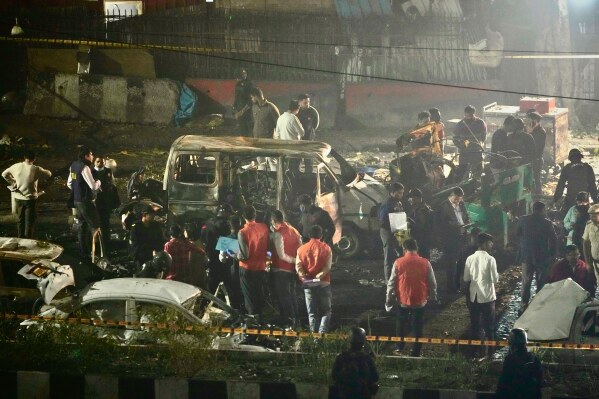
At about 6:52 pm IST, a car — reported to be a white Hyundai i20 — exploded near Gate 1 of the metro station adjacent to the Red Fort, in the crowded old city area of Delhi. Al Jazeera+4www.ndtv.com+4Wikipedia+4
Eyewitnesses described horrifying scenes:
- A vehicle coming to a halt at a red traffic light, followed by the explosion. The Guardian+1
- Fireball, debris, damaged vehicles around, shattered glass, panic, people screaming for help. The Guardian
- The blast occurred in a densely populated, crowded area (markets, foot traffic, adjacent to metro station) during evening hours, heightening the human toll.
Initial reporting indicates at least 8 people killed and 20+ injured, with some later reports suggesting up to 13 fatalities. Wikipedia+3The Guardian+3The Washington Post+3
Authorities have registered a case under the nation’s principal anti-terror law, the Unlawful Activities (Prevention) Act (UAPA), alongside the Explosives Act, signalling that they are treating this as potentially a terrorist incident rather than an accident. News on Air+2The Washington Post+2
Why the location matters
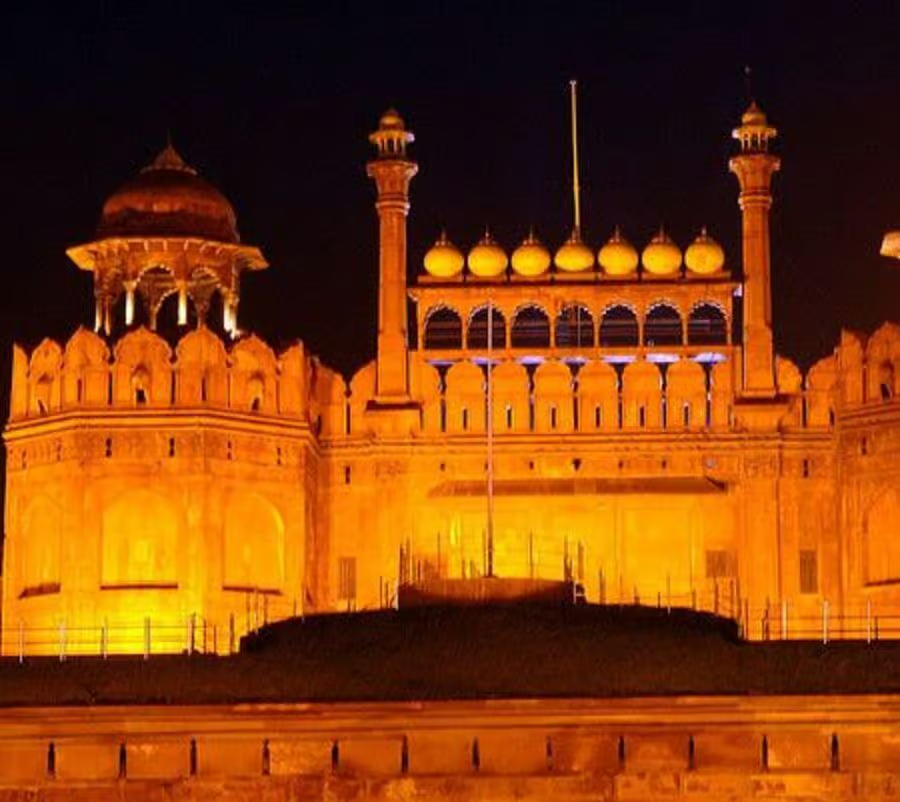
The Red Fort is not only a historical monument but a deeply symbolic site in India’s national consciousness, hosting major national observances and events. Its very name evokes India’s freedom struggle and sovereignty. Placing a blast in the immediate vicinity strikes both at physical security and emotional / symbolic nerve-centres.
The blast site being next to Gate 1 of the adjacent metro station and in the old walled city area places it in a zone of high pedestrian density, tourist traffic, informal markets and critical infrastructure — making the attack (if indeed deliberate) especially jarring. Wikipedia+2Al Jazeera+2
Immediate aftermath and response
- The nearby metro station (Lal Qila Metro Station) was closed for at least a day following the blast for security and investigation purposes. Business Standard
- Security agencies including the National Investigation Agency (NIA) and the National Security Guard (NSG) were reported to be involved in investigation and forensic analysis. www.ndtv.com
- Shopkeepers in nearby markets voiced deep concern — tourist-dependent commercial areas were already seeing business disruption. Business Standard
- The government and media emphasised that “all angles” were open in investigation, with focus on whether the explosion was a suicide attack, vehicle-borne improvised explosive device (VBIED) or other mode. Wikipedia+1
Broader implications
Security / counter-terror
If the blast is confirmed as a terror attack, it highlights that even the very heart of the capital is vulnerable — an area considered high security, yet one in which an explosive device was able to detonate in evening traffic. The invocation of anti-terror law underscores how seriously the authorities are treating the event.
Public confidence & urban resilience
Such incidents shake public confidence in the safety of urban spaces, especially public transit hubs, tourist sites, and densely populated city centres. They trigger immediate behavioural responses: avoidance of crowds, changes in commuting habits, anxiety among visitors and locals alike.
Economic & social disruption
Nearby businesses, especially in old-city markets and tourist areas, face immediate loss of revenue. The blast’s timing and location mean it affects not just the immediate victims but bystanders, the local economy and the image of the city.
Symbolism & politics
An attack near such an iconic monument carries symbolic weight — it resonates beyond the physical damage, touching national narratives of sovereignty, belonging and security. Politically, it puts pressure on authorities to deliver swift answers and to reassure citizens.
Looking ahead: What to watch for
- Investigation progress: Who carried out the attack? What was the explosive material? What was the motive? Timeline of events prior to explosion. For instance, reports mention forensic traces of explosives and possible links to earlier operations. The Washington Post+1
- Security adjustments: Will there be changes in how crowded zones like old Delhi are policed, monitored, and secured? How will transit hubs and heritage sites adapt?
- Community and public response: How will locals cope with trauma, business disruption, and fear? What support mechanisms will be put in place for victims and affected communities?
- Media and public discourse: Will the incident be framed primarily in terms of terrorism, public safety, urban planning or economic impact? The narrative will shape responses and memory.
- Longer-term resilience: How will Delhi rebuild confidence in its public spaces? How will tourism, local commerce and community life bounce back?
A personal reflection
As someone who has walked through the crowded lanes around the Red Fort and ridden the metro in Delhi’s old city, this incident hits home. The everyday rhythms of commuting, shopping, visiting heritage sites — all are vulnerable in an instant. The blast is a stark reminder of how our cities must balance openness and security, vibrancy and vigilance.
For the survivors, the families of the victims, the small business owners whose livelihoods have been shaken, and the millions of commuters who momentarily faced a sudden rupture in their sense of normalcy — the impact is profound and enduring.
In writing this, I hope to honour the lives lost, to highlight the need for solidarity, and to remind readers that resilience is not just about physical strength or security infrastructure — it’s about communities standing together, returning to the streets, markets and monuments that define urban life.